


A condo usually costs less to get into and hands off most of the maintenance, while a freehold house costs more upfront and puts every repair on you but gives you full control of the property and the land. Neither is "better." The right call depends on your budget, how much upkeep you want to do, and how much space you need. Here is the honest breakdown.
What is the real difference between a condo and a house?
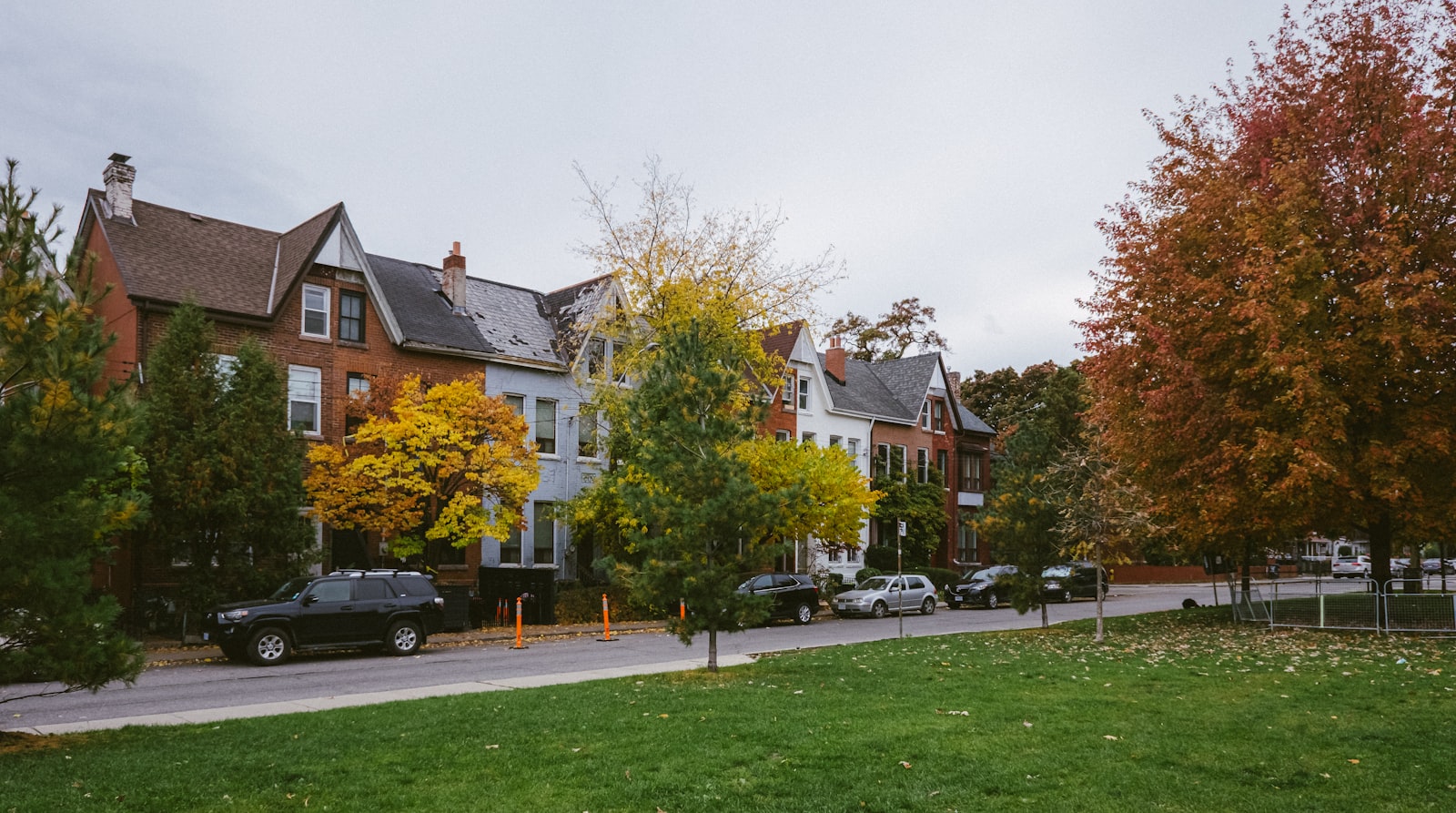
With a freehold house, you own the building and the land it sits on. You handle the roof, the furnace, the lawn, and the snow, and you decide what gets fixed and when.
With a condo, you own your unit and share ownership of common areas (hallways, roof, elevators, amenities) with everyone else in the building or complex. A condo corporation manages those shared parts, and you pay a monthly condo fee to fund it.
That single structural difference drives almost every trade-off below: cost, monthly carrying, effort, and control.
Which one costs less to buy?
In most Ontario markets, a condo has a lower entry price than a comparable house in the same area. That matters a lot for a first purchase, because the minimum down payment is tied to the price.
Ontario's minimum down payment is 5% on the first $500,000, 10% on the portion from $500,000 to $1,500,000, and 20% above $1,500,000. A lower price means a smaller down payment and a smaller mortgage. Learn more in our guide to the different types of homes in Ontario.
the minimum down payment on an $800,000 home in Ontario (5% on the first $500,000 plus 10% on the next $300,000)
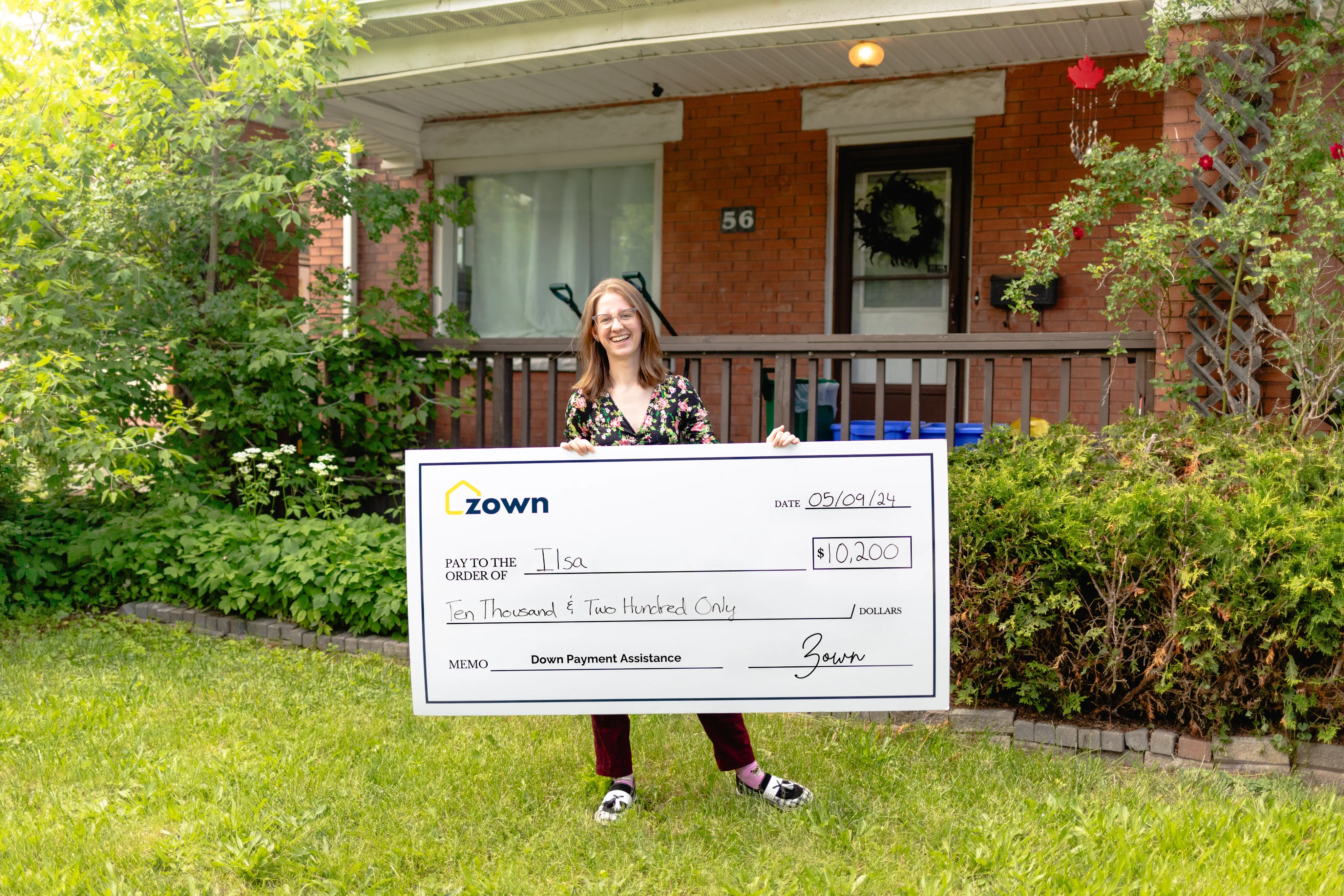
If less than 20% is down, mortgage default insurance is required and its premium is added to your mortgage. So a lower-priced condo can also mean a smaller insured mortgage. The Zown Down Payment Boost helps on either path: cash back of 1% of the purchase price, to a maximum of $25,000, paid into your savings at closing. On an $800,000 home that is about $8,000 toward closing costs and post-closing expenses.
What about the monthly carrying cost?
This is where buyers get surprised, so read this part twice.
A condo has a known monthly fee that funds maintenance, building insurance, the reserve fund, and often some utilities and amenities. It is predictable, and it can rise over time.
A house has no condo fee, but that does not mean maintenance is free. You self-fund the roof, furnace, windows, appliances, and yard. Those costs are lumpy: nothing for months, then a big bill. Both paths cost money to maintain. One just spreads it evenly and the other hits in chunks.
For how condo fees are calculated and what they cover, see condo fees explained.
Condo vs house, side by side
Condo vs house for a first-time buyer in Ontario
- Upfront cost. Condo: Usually lower entry price, smaller down payment; House (freehold): Usually higher price, larger down payment
- Monthly carrying. Condo: Predictable condo fee on top of the mortgage; House (freehold): No condo fee, but self-funded upkeep
- Maintenance effort. Condo: Low: exterior and common areas handled for you; House (freehold): Higher: everything is your responsibility
- Space. Condo: Typically smaller, less or no private outdoor space; House (freehold): Typically larger, private yard, more storage
- Control. Condo: Shared decisions, condo rules and bylaws; House (freehold): Full control of the property and land
Source: Zown Realty, Ontario 2026
Which one is less work?
A condo. The corporation handles the roof, landscaping, snow clearing, and common-area repairs, so your hands-on effort is low. That is a real draw if you travel, work long hours, or simply do not want to own a ladder.
A house is more work and more freedom at the same time. You can renovate, paint, plant, and build without asking anyone, but the time and cost land on you.
What about appreciation and resale?
Be careful with anyone who promises one type "always" appreciates faster. Values depend on location, timing, layout, and the specific property, not just the property type.
A house typically includes land, and land is finite, which many buyers weigh heavily. A condo can appeal to a wide pool of buyers (first-timers, downsizers, investors) which can help resale in the right building. What tends to matter most either way: location, condition, and buying at a sensible price for your budget rather than stretching to the max.
Lifestyle, space, and control
Think about how you actually live. Do you want a yard, a garage, and room to spread out? A house wins on space and privacy. Do you value amenities, security, and never touching a snow shovel? A condo fits better.
Control cuts both ways. A house gives you near-total say over your property. A condo comes with shared rules and bylaws (on pets, renovations, short-term rentals, and more) that protect the building but limit some choices. Read the rules before you fall in love with a unit.
Choose a condo if / choose a house if
Choose a condo if:
- You want the lowest realistic entry price and down payment.
- You would rather pay a predictable monthly fee than manage repairs yourself.
- You value amenities, security, or a lock-and-leave lifestyle.
- Space is less important than location and low upkeep.
Choose a house if:
- You need more space, storage, or a private yard.
- You want full control to renovate and maintain on your own terms.
- You prefer to self-fund maintenance rather than pay a monthly fee.
- Owning the land matters to you and your budget supports the higher price.
Still weighing the monthly math on a condo? Our take on whether condo fees are worth it walks through what you are actually paying for.
The most important step is knowing your real numbers before you shop either option. A Zown agent is salaried, not paid on commission, so the guidance you get is about the right fit for you, not the bigger sale.
See what your Down Payment Boost adds up to →
Reviewed by Arjun Dhawan, Head of Account Management and REALTOR® at Zown Realty Inc. Last updated July 16, 2026. General information, not legal or financial advice.