
Commission is the least transparent part of buying a home in Ontario, and it is the one thing almost nobody explains straight. Here is the mechanics, without the sales pitch: where the money comes from, who really pays it, what it buys, and the one part of it a buyer has any leverage over.
Who pays realtor commission in Ontario?
The seller signs the cheque. That is the literal answer, and it is also the answer most buyers have heard from a realtor at some point, usually in a tone that suggests the buyer is getting something for free.
The honest version is less flattering to the industry. A seller pricing their home knows commission is coming out of the proceeds, so it is priced in, the same way any other cost of selling is. The buyer's money pays for the house and everything attached to selling it. So while the seller pays commission in the mechanical sense, the buyer funds it in the economic sense.
That distinction matters because of what follows from it. If commission were genuinely free to buyers, there would be nothing to negotiate and nothing to get back. It is not free, which is exactly why a share of it can come back to you.
How is commission calculated?
Commission is a percentage of the final sale price, agreed in the listing agreement between the seller and the seller's brokerage before the home goes on the market. It is negotiable. It is not set by law, by RECO, or by any real estate board, and any suggestion that there is a mandatory rate is wrong.
In practice, Ontario listings are commonly quoted at around 5% of the sale price in total, and that total is split between the two brokerages involved: the one representing the seller and the one representing the buyer. Around 2.5% typically goes to the buyer's side. Both halves are negotiable, both vary by brokerage and by listing, and lower and higher arrangements are common.
Two things people get wrong here. First, the percentage applies to the whole sale price, not the seller's equity, so the dollar amount grows with the market whether or not the work does. Second, the money goes to the *brokerages* first, not directly to the individual agents, and how it is then split with an agent is a separate arrangement inside each brokerage.
the commission total commonly quoted on Ontario listings, split between the seller's and buyer's brokerages. It is negotiable, and always set in the listing agreement rather than by any regulator.
If you want the arithmetic on a specific price rather than a percentage, our realtor commission calculator does it on the actual numbers.
What does the commission actually pay for?
On the seller's side, it covers pricing and listing strategy, photography and marketing, MLS exposure, showings, negotiation, and the paperwork through to closing.
On the buyer's side, it covers the search, showings, comparable sales analysis, writing and negotiating the offer, managing conditions like financing and inspection, and coordinating with your lawyer and lender to closing.
The honest observation is that this is a percentage fee attached to work that does not scale with price. Negotiating a $1.2 million purchase is not twice the work of negotiating a $600,000 one, but it pays twice as much. That gap between what the fee costs and what the work requires is the reason commission structures are under pressure across the industry.
Do buyers pay their agent directly?
Usually not. The buyer's brokerage is normally paid out of the commission the seller's brokerage has already agreed to share, which is why buyers rarely see an invoice.
You do sign something, though: a Buyer Representation Agreement, which sets out what your brokerage is owed and for how long. Read the commission clause in it. If a listing offers less to the buyer's side than your agreement specifies, the difference can become payable by you. That is not a common scenario in Ontario, but it is a real one, and it is worth knowing before you sign rather than after.
Is a cashback or commission rebate legal in Ontario?
Yes. A brokerage is free to share part of the commission it earns with its own client, and it happens across Canada. There is no rule requiring a brokerage to keep all of what it earns.
The variation is in the model. Some brokerages pay a flat referral-style amount. Some discount their own listing side rather than the buyer's. Some rebate a percentage of the buyer-side commission, which is the version that matters most to buyers, because the buyer-side share is the only part of the commission a buyer has any real influence over.
If you want the detail on how the rebate models differ and what to watch for in each, we wrote that up separately: what a cashback realtor is, and how the models compare.
What questions should I ask about commission before signing?
Ask these before you sign a representation agreement, not after:
- What is your commission, and what happens if a listing offers the buyer's side less than that?
- How long does the agreement run, and what happens if we part ways before it ends?
- Is the agent salaried, or paid per transaction?
- Does anything about how you are paid change what you would recommend I buy?
- Do you share any part of your commission with me, and if so, when is it paid and is it conditional?
The salary question is the one most buyers never think to ask, and it is the one that most changes the advice you get. An agent paid only when you buy has a direct interest in you buying, sooner and for more. An agent on a salary does not.
How Zown handles it
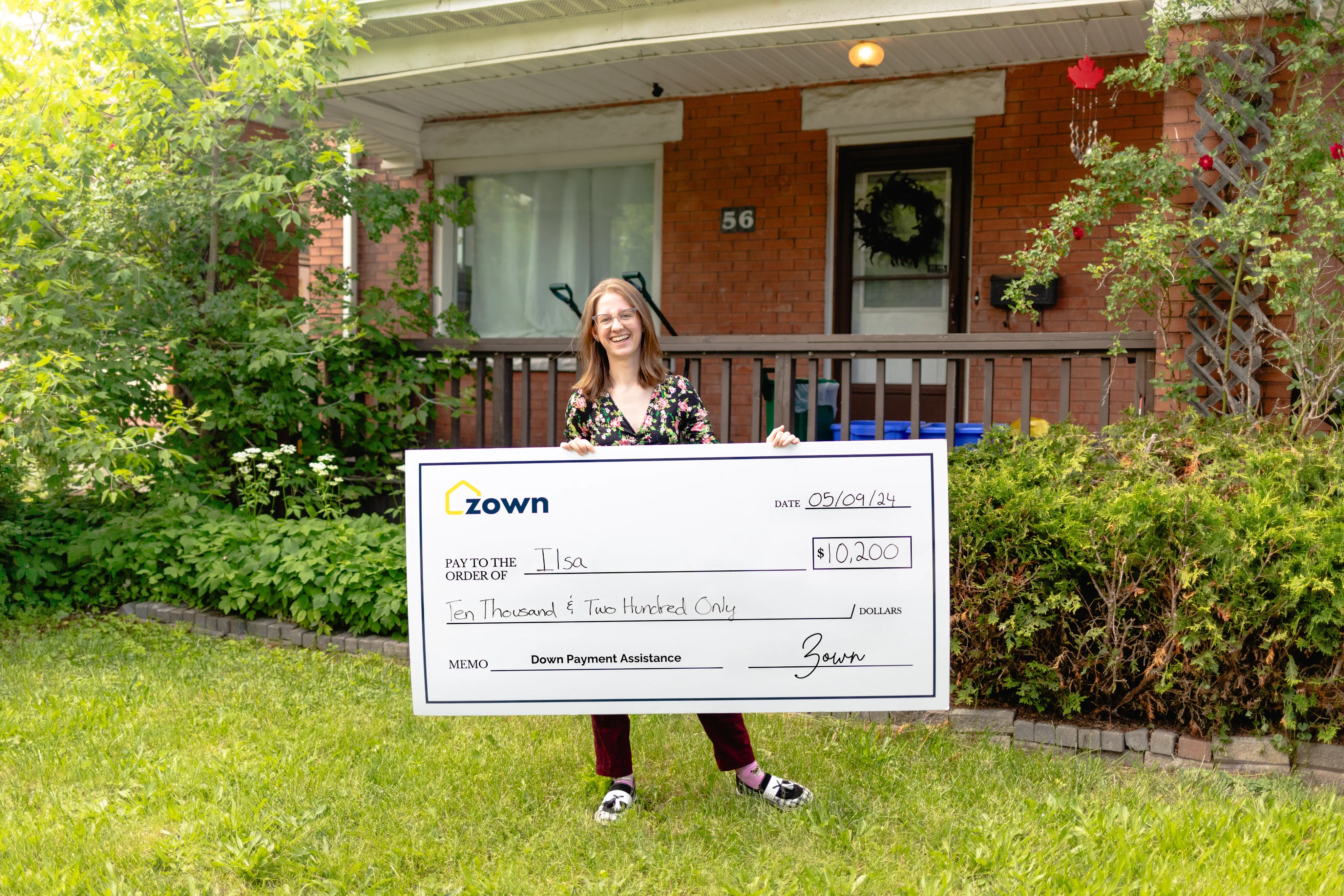
Zown is a brokerage, and it earns the buyer-side commission like any other brokerage does. The difference is what happens to it: Zown gives the majority of that commission back to the buyer as a Down Payment Boost, 1% of the purchase price and up to $25,000, paid at closing.
Two things follow from that structure that are worth naming. Our REALTORS® are salaried, so nobody's pay depends on you buying a particular home or buying at all. And the boost is money back on the purchase, which adds to what you have left over afterward rather than replacing your down payment.
ZOWN Realty is registered under the Real Estate and Business Brokers Act, 2002, and all agents hold valid RECO registrations. To date Zown has boosted more than 800 buyers and paid out more than $7M.