


When a house sells in Ontario, thousands of dollars in commission changes hands. A cashback realtor gives some of that money back to the buyer. It sounds too good to be true, which is exactly why buyers ask us whether it is a gimmick, whether it is even legal, and what the catch is.
Here is a straight answer to all three.
What is a cashback realtor?
A cashback realtor is a licensed real estate agent or brokerage that returns part of the commission they earn to you, the buyer, typically as a rebate paid around closing. Instead of keeping the full buyer-side commission, they share a portion of it with the client who is doing the buying.
The reason this is possible comes down to how commissions work in Ontario.
How do commissions work in Ontario?
In a typical Ontario resale transaction, the total commission is around 5% of the sale price, split between the two sides: roughly 2.5% to the brokerage representing the seller, and roughly 2.5% to the brokerage representing the buyer. Commissions are always negotiable, and on closing day the cheque comes from the seller's proceeds.
But "the seller pays it" is not the same as "it's free to you." The commission is built into the price a home sells for, the same way it would be if the seller had to net a target amount after paying it. As the buyer, you are the one who ultimately pays that price. So when a cashback realtor rebates part of the buyer-side commission to you, they are not handing you a bonus on someone else's expense, they are giving you back a real share of a cost that is already priced into your purchase.
the typical buyer-side commission in Ontario, paid by the seller, that a cashback brokerage can share
We go deeper on the mechanics in How Do Realtors Get Paid in Ontario?
Is cashback from a realtor legal in Ontario?
Yes. In Ontario, a registered brokerage is allowed to give a commission rebate or incentive to its buyer client. This is governed by the Trust in Real Estate Services Act (TRESA), the provincial law that replaced REBBA, and overseen by the Real Estate Council of Ontario (RECO).
The important conditions:
- The rebate must come from a registered brokerage, not an unlicensed third party.
- It must be disclosed and documented properly as part of the transaction.
- The brokerage cannot pay a referral fee or commission to someone who is not registered to trade in real estate.
So a cashback realtor is not a loophole or a grey area. It is a registered brokerage choosing to compete by sharing its commission with buyers, which the law expressly permits.
Cashback realtor versus traditional realtor
The difference is not the service. A good cashback brokerage does everything a traditional buyer's agent does: shows homes, reviews the Agreement of Purchase and Sale, reads comparables, and negotiates. The difference is what happens to the commission.
Cashback realtor versus traditional realtor
- Who the commission comes out of at closing. Traditional realtor: Seller's proceeds; Cashback realtor: Seller's proceeds
- Buyer-side commission (approx.). Traditional realtor: 2.5%; Cashback realtor: 2.5%
- What you get back. Traditional realtor: Nothing; Cashback realtor: A share of the commission
- When you get it. Traditional realtor: N/A; Cashback realtor: Varies by brokerage; ask before you sign
- Full buyer representation. Traditional realtor: Yes; Cashback realtor: Yes
- Regulated by RECO. Traditional realtor: Yes; Cashback realtor: Yes
Source: Zown Realty, Ontario 2026
What to watch for with a cashback offer
Not all cashback offers are equal. Before you choose a brokerage on the strength of a rebate, ask four questions:
- When do I get it? A rebate paid at closing is real and useful. A vague "future credit" is not the same thing.
- How is it calculated? Is it a percentage of the price, a flat amount, or a share of the commission? Get the number in writing.
- Is the service full-service? A rebate is a bad deal if you lose experienced representation on the biggest purchase of your life.
- Who is paying it? It should be the registered brokerage, documented in the transaction.
The headline percentage is marketing. The timing, the reliability, and the quality of representation behind it are what actually matter.
How Zown's Down Payment Boost works
Zown is a registered Ontario brokerage built around this idea. Eligible Ontario buyers get a Down Payment Boost of 1% of the purchase price, up to $25,000, whichever mortgage provider they use.
Two things make it different from a typical rebate. First, timing: when you close with one of Zown's partner lawyers, the Boost is paid at closing, when you actually need the cash, so it offsets your closing costs and lowers the total you need saved to buy. If you use your own lawyer instead, Zown cannot advance the funds ahead of receiving its own commission (that money would otherwise sit at risk in a lawyer's trust account if the deal fell through), so the Boost is paid once Zown receives the commission from the seller's brokerage, typically 2 to 8 weeks after closing. Second, the model does not trade away service to fund the rebate. Zown uses salaried agents and AI to handle the routine work, and those salaried agents focus on negotiation and closing, where judgment matters. The savings come from efficiency, not from cutting corners on representation.
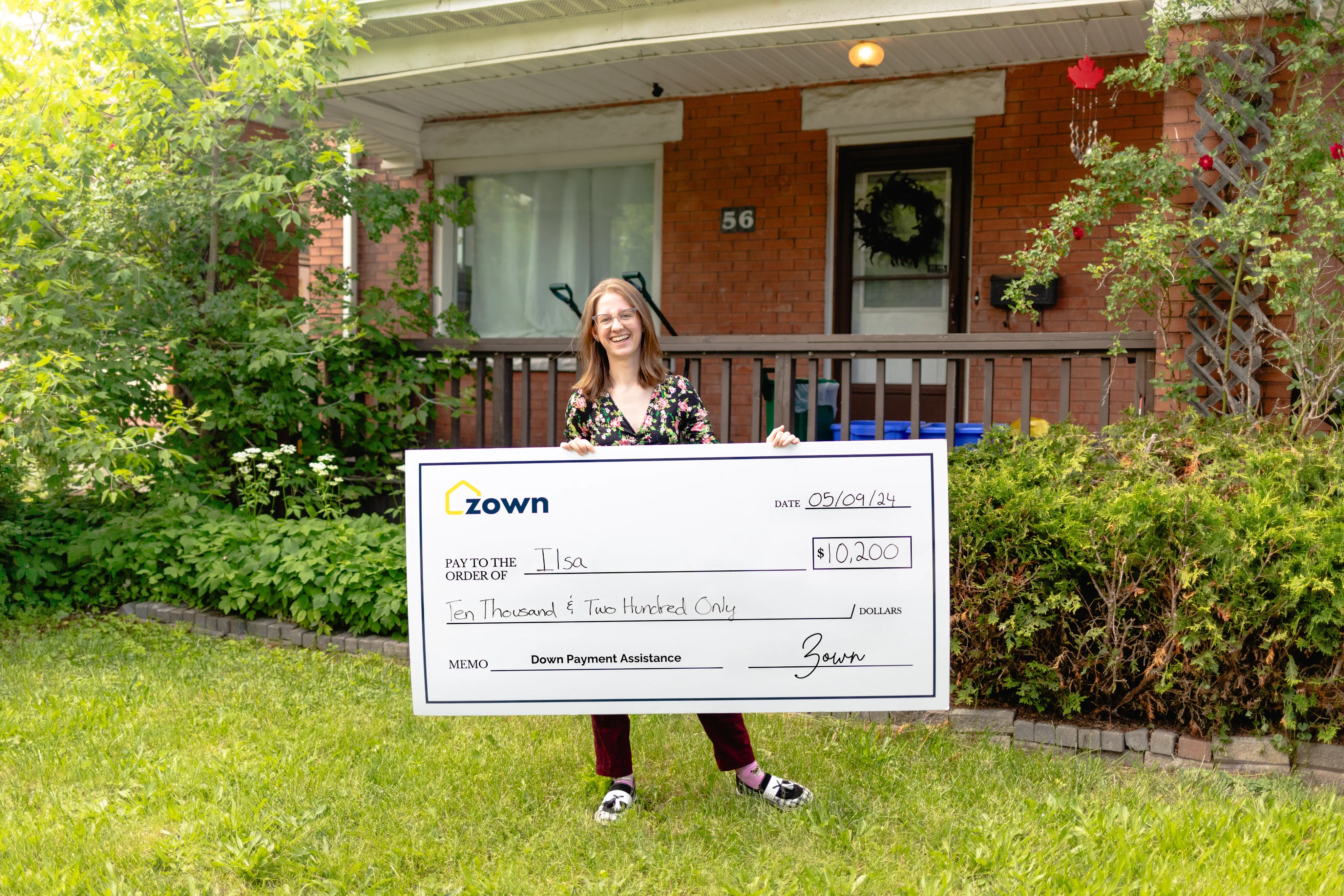
More than 800 Ontario families have used the Boost, totaling over $7 million returned to buyers.
See your Down Payment Boost estimate →
Last updated July 27, 2026. General information, not legal or tax advice. Confirm current TRESA and RECO rules and your own tax situation with a professional.