Fixed and variable mortgages differ in one core way: whether your interest rate can change during the term. A fixed rate stays the same for the whole term, so your payment is predictable. A variable rate moves with your lender's prime rate, so it can rise or fall. Neither is automatically better; the right choice depends on how much rate certainty you want.
Below we break down how each type works, what happens when rates move, the penalty differences that catch buyers off guard, and who each tends to suit.
What is a fixed-rate mortgage?
A fixed-rate mortgage locks your interest rate for the entire term, most commonly a term of one to five years. Your rate does not change no matter what happens to the broader market during that time.
Because the rate is fixed, your regular payment stays the same for the whole term. Every payment splits between interest and principal in a predictable way, which makes budgeting straightforward.
The trade-off is that you pay for that certainty. Fixed rates are set based on what lenders expect over the term, so you may pay more or less than a variable borrower depending on how rates actually move. You are essentially buying peace of mind.
What is a variable-rate mortgage?
A variable-rate mortgage has a rate tied to your lender's prime rate, usually expressed as prime plus or minus a set amount. When prime moves, your variable rate moves with it.
There are two common styles of variable mortgage, and the difference matters:
- Variable rate, fixed payment (VRM): your payment stays the same, but the split between interest and principal shifts when rates change. If rates rise a lot, more of your payment goes to interest and less to principal, which can slow how fast you pay down the loan.
- Adjustable rate (ARM): your actual payment changes each time the rate changes. When rates rise, your payment rises; when they fall, your payment falls.
With a variable mortgage you take on rate risk in exchange for flexibility and, often, smaller break penalties. Your total interest cost over the term is not known in advance.
How does each behave when rates move?
This is the heart of the fixed vs variable decision.
With a fixed mortgage, a rate change in the market has no effect on you until your term ends and you renew. You are insulated during the term. The risk lands at renewal, when you take on whatever rate is available then.
With a variable mortgage, rate changes reach you during the term. If rates fall, more of your payment tends to go toward principal (or your payment drops, on an adjustable mortgage). If rates rise, the opposite happens. Some fixed-payment variable mortgages also have a "trigger rate," the point at which your set payment no longer covers the interest, which can force a payment increase or a lump-sum request from your lender.
the number of ways your variable rate can change your loan: the size of your payment, or how much of it pays down principal
We are not going to predict where rates head next, and no one can reliably. The honest framing is about risk tolerance: a fixed mortgage moves the uncertainty to renewal day, while a variable mortgage spreads smaller uncertainties across the term.
Fixed vs variable: side-by-side
Fixed vs variable mortgage at a glance
- Interest rate. Fixed rate: Locked for the full term; Variable rate: Moves with lender's prime rate
- Monthly payment. Fixed rate: Same every month; Variable rate: Steady or changing, depending on the type
- Rate certainty. Fixed rate: High; you know your cost; Variable rate: Lower; cost depends on rate moves
- Budgeting. Fixed rate: Easy to plan around; Variable rate: Requires a cushion for increases
- Typical break penalty. Fixed rate: Often larger (see below); Variable rate: Often smaller, commonly ~3 months' interest
- Best suited to. Fixed rate: Buyers who value predictability; Variable rate: Buyers comfortable with some rate risk
Source: Zown Realty, general Canadian mortgage features 2026
What are the prepayment and penalty differences?
The break penalty is where fixed and variable mortgages often differ the most, and it surprises many first-time buyers. A break penalty is what you pay if you end the mortgage early, for example if you sell, refinance, or switch lenders mid-term.
For a variable mortgage, the penalty is typically about three months of interest. It is usually simpler to calculate and often smaller.
For a fixed mortgage, the penalty is usually the greater of three months' interest or something called the interest rate differential (IRD). The IRD can be substantial depending on your rate, your lender's calculation method, and how much time is left on the term. Fixed penalties can run into the thousands of dollars.
Prepayment privileges (the extra you can pay down each year without penalty) exist on both types and vary by lender, so they are worth comparing directly rather than assuming.
The takeaway: if there is a real chance you will move, refinance, or pay off the mortgage early, the penalty structure deserves as much attention as the headline rate. A variable mortgage can be easier and cheaper to exit.
Who does each tend to suit?
There is no universal answer, but some patterns are common.
A fixed mortgage tends to suit buyers who want a payment they can set and forget, who are budgeting tightly, or who would lose sleep over rate movements. If certainty is worth more to you than the chance of saving, fixed does its job.
A variable mortgage tends to suit buyers who have some room in their budget to absorb a payment increase, who value the flexibility of a smaller break penalty, and who are comfortable riding rate movements over the term.
Your amortization, your down payment, and your overall plan matter too. If you are still working out the basics, our guide to how mortgage amortization works is a good next read, and first-time home buyer programs in Ontario covers the incentives that can free up cash either way.
One more honest point: the "right" answer is less about beating the market and more about matching the mortgage to your life and your tolerance for surprise.
See what you get back with a Down Payment Boost →
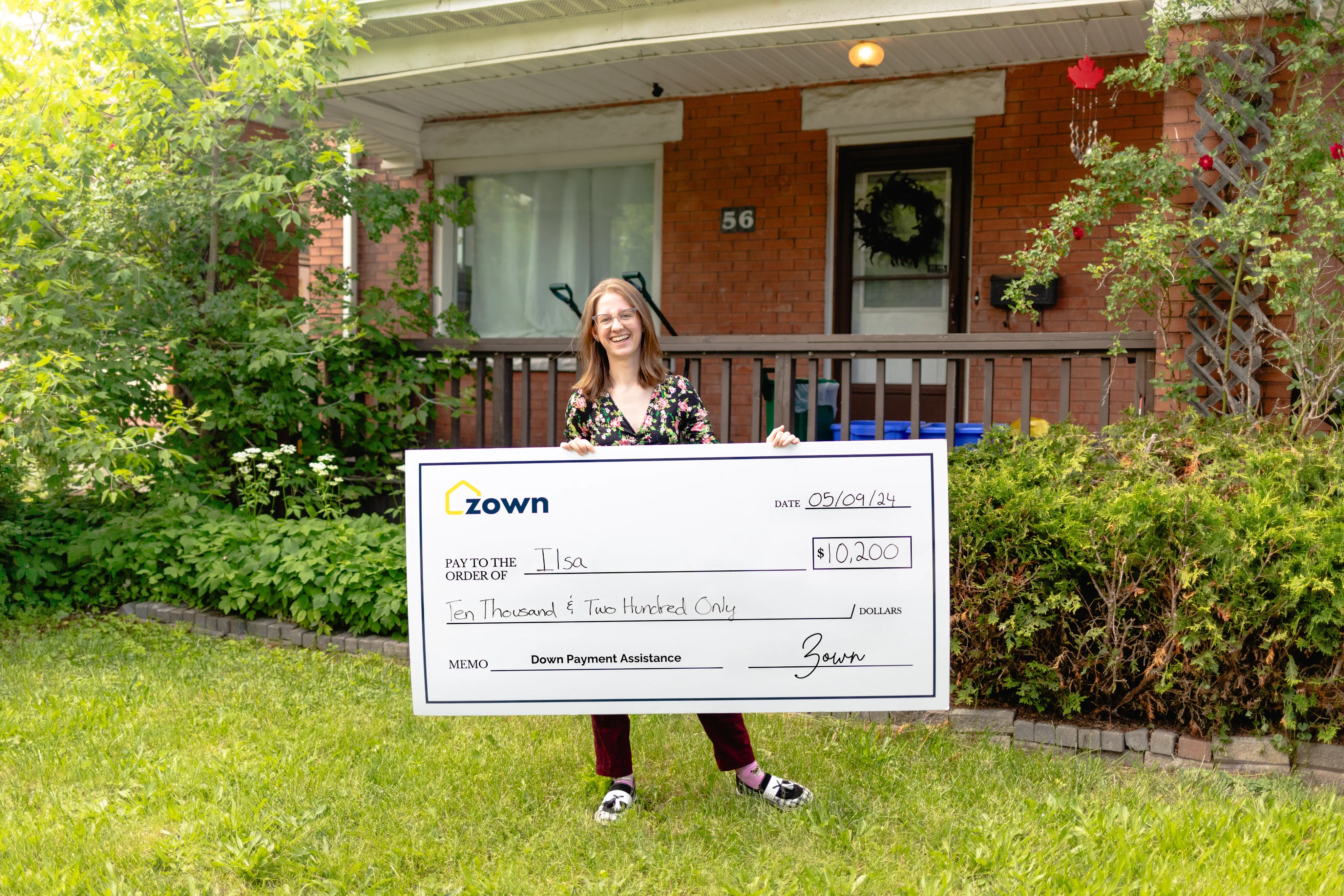
Whichever rate type you choose, the money you have on hand at closing matters. Zown's Down Payment Boost pays cash back of 1% of the purchase price, to a maximum of $25,000, into your savings at closing (most buyers put it toward closing costs and the expenses that come right after). On an $800,000 home that is about $8,000. Our agents are salaried, not commission-driven, so the guidance you get on fixed versus variable is built around your situation, not a sale. If you are weighing your options, understanding pre-approval versus pre-qualification is a smart early step too.
Last updated July 21, 2026. General information, not legal or financial advice.