Closing is the final step of buying a home: the day ownership legally transfers from the seller to you. Your real estate lawyer handles the legal work, your lender advances the mortgage money, you pay the balance of your down payment and closing costs, title is registered in your name, and you get the keys. In Ontario this usually happens on the closing date set in your offer.
Here is exactly who does what, and how to keep the day from going sideways.
What does "closing" actually mean?
Closing (also called completion) is the moment the purchase becomes official. Up to this point you have a signed agreement, but you do not own the home yet. On the closing date, money and legal documents change hands, the transfer of ownership is registered with the province, and possession passes to you.
Two things happen at once: the title (legal ownership) is transferred into your name, and the funds (your money plus the mortgage) are delivered to the seller's lawyer. Once both are done and confirmed, you get the keys.
If you have just had an offer accepted and want the bigger picture, our guide on what happens after your offer is accepted walks through everything between acceptance and closing day.
What does your real estate lawyer do?
In Ontario, you need a lawyer (or licensed paralegal working under one) to close a home purchase. This is not optional. Your lawyer does the legal heavy lifting in the weeks before closing and on the day itself.
Here is the core of their job:
- Title search. They search public records to confirm the seller actually owns the property and that there are no surprises like liens, unpaid taxes, or claims against the title.
- Requisitions. If the search turns up a problem, your lawyer sends a formal request (a requisition) asking the seller's lawyer to fix it before closing.
- Title insurance. They arrange a title insurance policy that protects you against certain title defects, fraud, and survey issues after you own the home.
- Statement of adjustments. They prepare and review this document (more on it below) so you pay the correct final amount.
- Registration and funds. On closing day they register the transfer and your mortgage, and they move the money to the seller's side.
Because Zown agents are salaried rather than commission-driven, our team can walk you through this process and coordinate with your lawyer without pushing you to rush. The goal is that you understand each step, not just sign where the arrow points.
What is the statement of adjustments, in plain terms?
The statement of adjustments is a simple accounting sheet your lawyer prepares. It starts with the purchase price, subtracts what you have already paid (like your deposit), and adjusts for shared costs so that each side pays only its fair share.
The classic example is property tax. If the seller prepaid property taxes for the whole year and you take possession partway through, you owe them back for the portion of the year you will own the home. That gets added to your bill. If the opposite is true, it gets credited to you.
The bottom line of the statement is the balance due on closing: the exact amount of money you need to send to your lawyer to complete the purchase. Common items adjusted include:
- Your deposit (credited to you, since you already paid it)
- Prepaid property taxes
- Prepaid utilities or condo/maintenance fees, where applicable
- Any fuel (like an oil tank) left in the home
Read the statement carefully with your lawyer. It is normal to have questions, and the numbers should match what you were told.
How does the lender advance the mortgage funds?
If you have a mortgage, your lender sends the mortgage money to your lawyer, usually a day or so before or on the closing date. Your lawyer combines those funds with the money you send (your down payment balance and closing costs) and delivers the total to the seller's lawyer.
To release the funds, the lender needs its conditions met first: your mortgage documents signed, proof of home insurance, and confirmation that the down payment is in place. Miss one of these and the money can be held up, which is one of the most common causes of a late closing.
What do you owe on closing day?
On closing day you are responsible for the balance of your down payment plus your closing costs. Your deposit already counts toward the down payment, so you owe the rest of it, not the full amount again.
Closing costs are the extra one-time expenses on top of the purchase price. The big one in Ontario is land transfer tax, paid at closing. Here is a typical breakdown.
What you pay at closing in Ontario
- Balance of down payment. What it is: Your total down payment minus the deposit you already paid
- Ontario land transfer tax. What it is: A provincial tax on the purchase, due at closing (Toronto buyers also pay a municipal LTT)
- Legal fees and disbursements. What it is: Your lawyer's fee plus costs like title search and registration
- Title insurance. What it is: A one-time premium for your title policy
- Adjustments. What it is: Your share of prepaid property taxes, utilities, or fees from the statement of adjustments
- Home insurance. What it is: Proof of a policy is required before the lender releases funds
Source: Zown Realty, Ontario 2026
First-time buyers get a break on land transfer tax. Ontario offers a rebate of up to $4,000, and buyers in the City of Toronto can claim up to $4,475 more on the municipal land transfer tax, for as much as $8,475 in total in Toronto. Your lawyer applies these at closing.
the first-time buyer land transfer tax rebate available in Toronto (Ontario $4,000 + municipal $4,475)
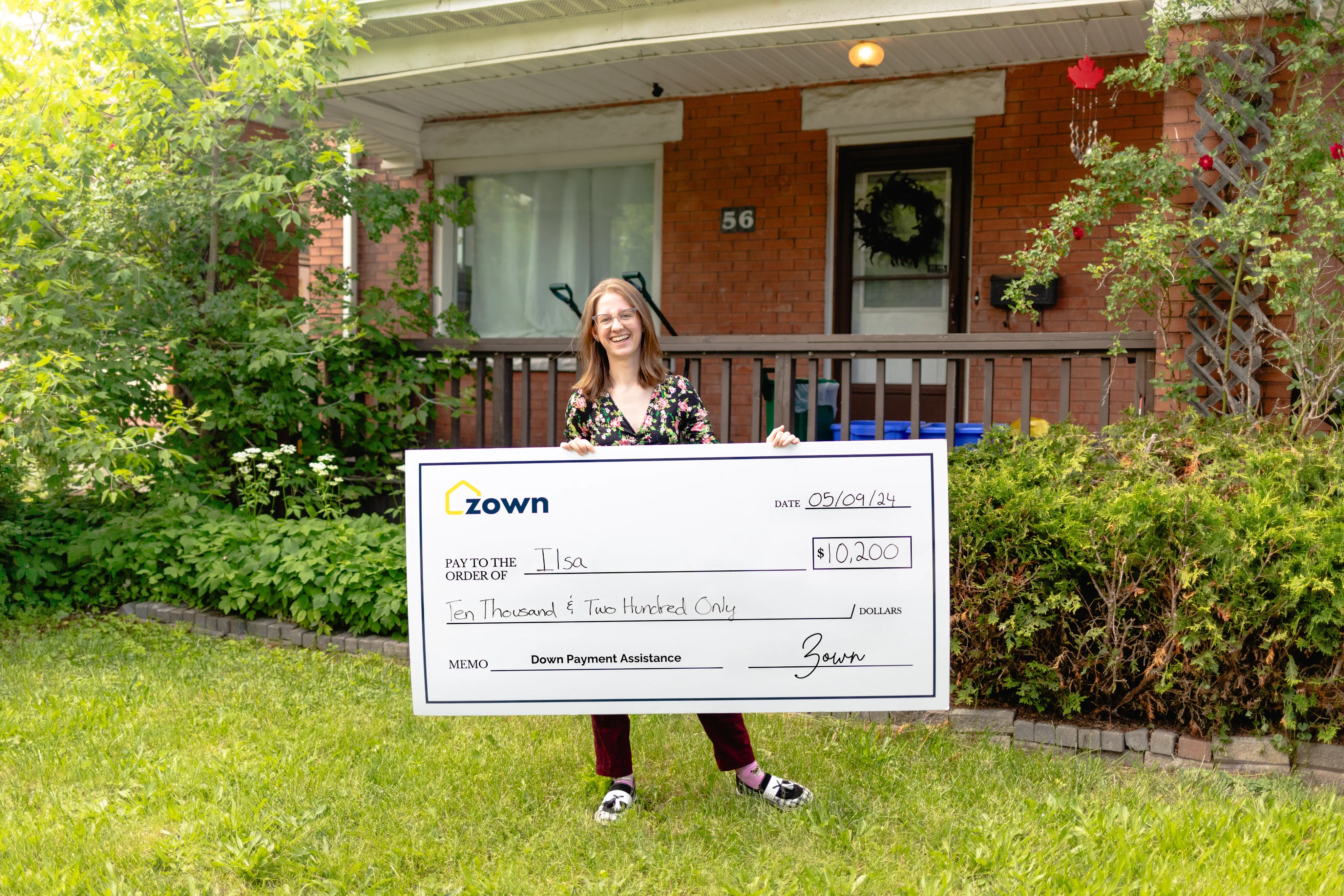
A quick note on the Down Payment Boost. Zown pays eligible buyers cash back of 1% of the purchase price, to a maximum of $25,000, at closing. On an $800,000 home that is roughly $8,000. It is paid into your savings at closing, so most buyers put it toward exactly these closing costs and post-closing expenses. It is not added to your down payment; it is money back in your pocket when you need it most.
For the full list of programs that can lower your out-of-pocket cost, see our guide to down payment assistance in Ontario.
How do you register the title and get the keys?
On closing day, once the funds and documents are ready, your lawyer electronically registers two things with Ontario's land registration system: the transfer of ownership into your name and your new mortgage (if you have one).
Registration typically happens during business hours, and it can take until mid-afternoon or later. The keys are released once registration is complete and the seller's lawyer confirms they have received the full payment. That is why possession sometimes happens later in the day rather than first thing in the morning. Plan movers accordingly.
What are the "closing day risks," and how do you prevent them?
The most common fears are a delayed closing or money not arriving on time. The good news: nearly all closing-day problems come from paperwork or funds running late, and both are preventable with a little lead time.
Here is how to keep your closing smooth:
- Sign your mortgage documents early. Do not leave lender paperwork to the last day.
- Send your funds ahead of time. Get the balance to your lawyer a few days before closing. Certified funds or a wire can take time to clear.
- Confirm home insurance early. Have proof of a policy ready, because the lender will not release money without it.
- Respond fast to your lawyer. If a requisition or signature is needed, quick replies prevent bottlenecks.
- Do your final walkthrough before closing. Confirm the home is in the agreed condition so there are no last-minute disputes.
If both sides are ready, closing is usually uneventful. Building a realistic runway helps; see our home buying timeline to plan the weeks leading up to your date.
See what your Down Payment Boost adds up to →
Last updated July 21, 2026. General information, not legal or financial advice.