No, you are not legally required to use a realtor to buy a house in Ontario. But for most first-time buyers the honest answer is that you probably want one, because the buyer's agent is customarily paid from the sale proceeds. That means the help usually costs you nothing out of pocket. Here is when it makes sense and when it might not.
What does a buyer's agent actually do?
A buyer's agent represents you, not the seller. Their job is to look after your interests from the first showing all the way through to closing day.
In practice that means a lot of moving parts:
- Finding and screening listings that fit your budget and must-haves
- Booking showings and giving you an honest read on each property
- Pulling recent sold data so you know what a home is really worth
- Writing and submitting your offer on the Agreement of Purchase and Sale (OREA Form 100)
- Negotiating price, closing date, and conditions like financing and home inspection
- Coordinating your deposit, lawyer, lender, and inspector so nothing slips
- Flagging problems, from a shaky offer structure to a red flag in the paperwork
The value is not just opening doors. It is the judgment calls under pressure: how much to offer, which conditions protect you, and when to walk away.
Do I have to pay for a buyer's agent in Ontario?
Usually not out of your own pocket. Buyer-side commission is customarily paid from the sale proceeds, so the cost is typically built into the deal rather than billed to you directly.
Here is how it generally works. The seller and their brokerage agree on a total commission, and a portion is set aside for whoever brings the buyer. When your agent represents you, that portion covers their work. You still want this spelled out in writing in your buyer representation agreement so there are no surprises.
Ontario also allows a brokerage to rebate part of its commission back to you as cash back, as long as it is disclosed. That is the mechanism behind Zown's cash back. We cover how the cashback works and the rules behind it in a separate guide.
the typical out-of-pocket cost of a buyer's agent, since buyer-side commission is customarily paid from the sale proceeds
For a fuller breakdown of who pays whom, see how realtors get paid in Ontario.
What are the risks of buying a house without a realtor?
You can buy unrepresented, but the risks are real and they tend to show up at the worst moments.
You negotiate against a professional. The listing agent works for the seller and is trained to get the highest price. Without your own representation, you are on your own side of a table where the other person does this for a living.
Contract mistakes are expensive. The Agreement of Purchase and Sale is a binding legal contract. A missed condition (like a financing or inspection clause) can leave you locked into a purchase you cannot complete, and your deposit at risk.
You may not know what you are missing. Overpaying, skipping an inspection, or misreading a status certificate on a condo can cost far more than any commission ever would.
Dual agency limits your advocate. If you lean on the listing agent, their duties are split. They cannot fully advocate for you the way an agent who represents only you can.
None of this means every buyer needs an agent. It means going without one is a decision to make with eyes open, not by default.
When might you NOT need a realtor?
To be genuinely fair, there are situations where representation matters less:
- You are buying from someone you know. A private sale between family or friends at an agreed price has less to negotiate.
- You are an experienced investor. If you have closed many deals, read contracts comfortably, and have your own lawyer and inspector on speed dial, you may not need the same hand-holding.
- You have strong independent advisors. A sharp real estate lawyer can catch many contract issues, though a lawyer is not a substitute for market and negotiation help.
Even then, most people find that having someone on their side, at little to no out-of-pocket cost, is worth it. The question is less "do I need one" and more "am I getting a good one."
With an agent vs. without an agent
Buying with a buyer's agent vs. going unrepresented
- Out-of-pocket cost. With a buyer's agent: Typically $0 (paid from sale proceeds); Without an agent: $0, but you take on all the work and risk
- Offer and contract. With a buyer's agent: Agent drafts and reviews Form 100; Without an agent: You draft it or rely on the seller's side
- Negotiation. With a buyer's agent: Someone on your side of the table; Without an agent: You negotiate against the listing agent
- Market pricing. With a buyer's agent: Access to recent sold data and comparables; Without an agent: Guesswork or public estimates
- Whose interests. With a buyer's agent: Yours; Without an agent: The seller's, if you use their agent
Source: Zown Realty, Ontario 2026
How is Zown different?
Most agents earn commission, which can nudge advice toward closing a deal quickly. Zown works differently on two fronts.
First, our agents are salaried. Their advice is not commission-driven, so the guidance you get is unbiased, end-to-end help through the whole purchase. If a home is wrong for you, there is no financial reason to push you toward it.
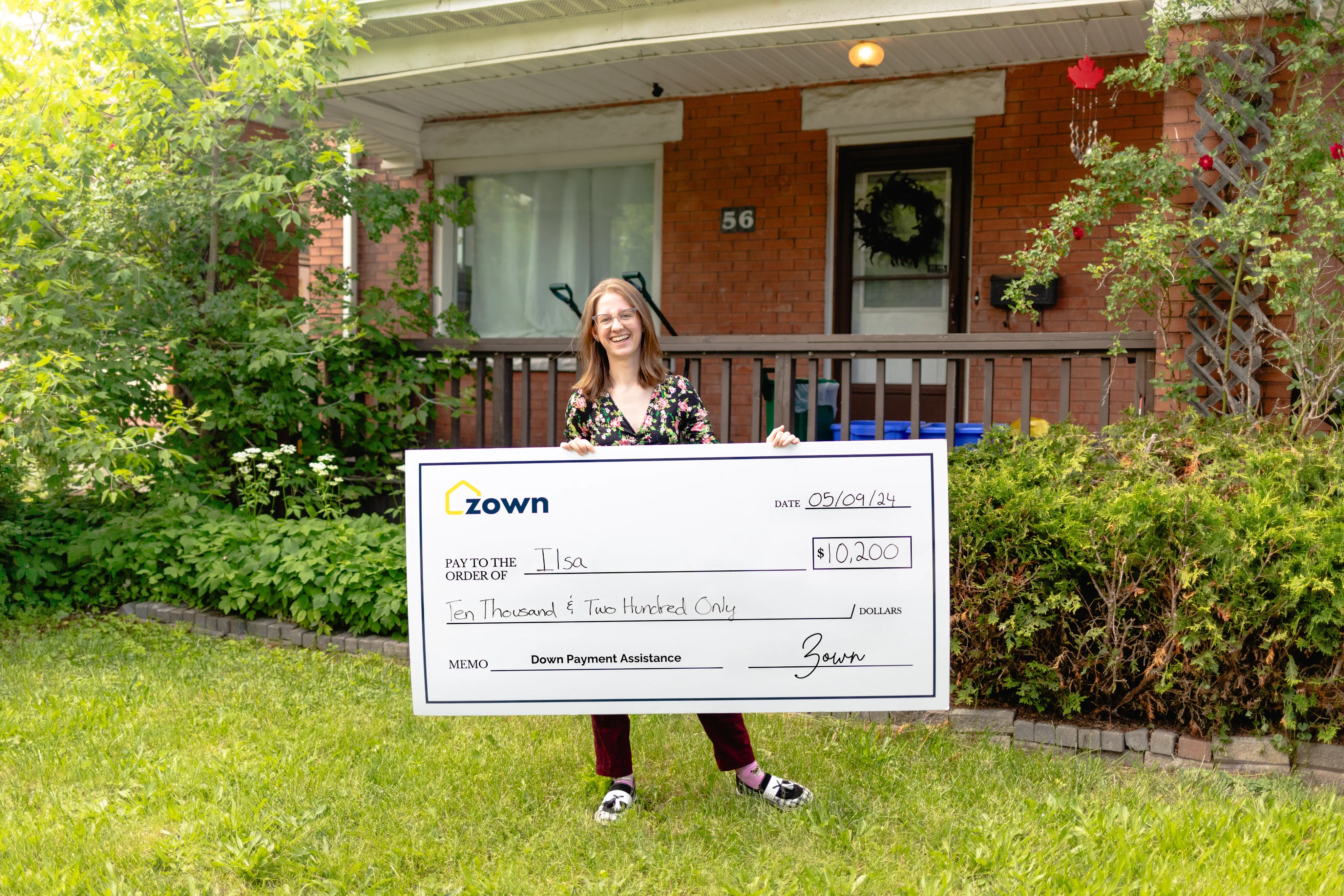
Second, we share the savings back with you through the Down Payment Boost: cash back of 1% of the purchase price, to a maximum of $25,000, paid into your savings at closing. On an $800,000 home that is roughly $8,000. Most buyers put it toward closing costs and post-closing expenses like furniture and moving.
Zown's Down Payment Boost, cash back of 1% of the purchase price, paid at closing
If you are just getting started, our guide to buying your first home in Ontario walks through the full process, from down payment to closing.
See what your Down Payment Boost adds up to →
Reviewed by Arjun Dhawan, Head of Account Management and REALTOR® at Zown Realty Inc. Last updated July 16, 2026. General information, not legal or financial advice.