
To find a good realtor in Ontario, look for someone who is licensed under RECO, works your area and property type, communicates the way you want, and can explain clearly how they are paid before you commit. The best way to tell them apart is to ask the same set of questions and compare the answers. This guide gives you those questions.
Choosing a buyer's agent is one of the biggest decisions you will make before you even see a home. The right one saves you money and stress. The wrong one costs you both. Here is how to pick well.
What does a good buyer's realtor actually do?
A buyer's agent works for you, not the seller. Their job is to find suitable homes, book showings, run the numbers with you, write and negotiate your offer, manage deadlines, and guide you through to closing.
In Ontario, every licensed agent works under a brokerage and is regulated by RECO under the Real Estate and Business Brokers Act, 2002. That licence sets a baseline. It does not tell you whether the person is good, honest, or a fit for you. That part is on you to check.
How is a buyer's realtor paid, and can they give me cashback?
This is the first thing to understand, because it shapes everything else.
In Ontario, the buyer-side commission is customarily paid out of the sale proceeds, so it usually does not come out of your pocket directly. A rebate, where the agent gives part of their commission back to you as cashback, is permitted in Ontario when it is disclosed. Many buyers do not know this is allowed, so they never ask.
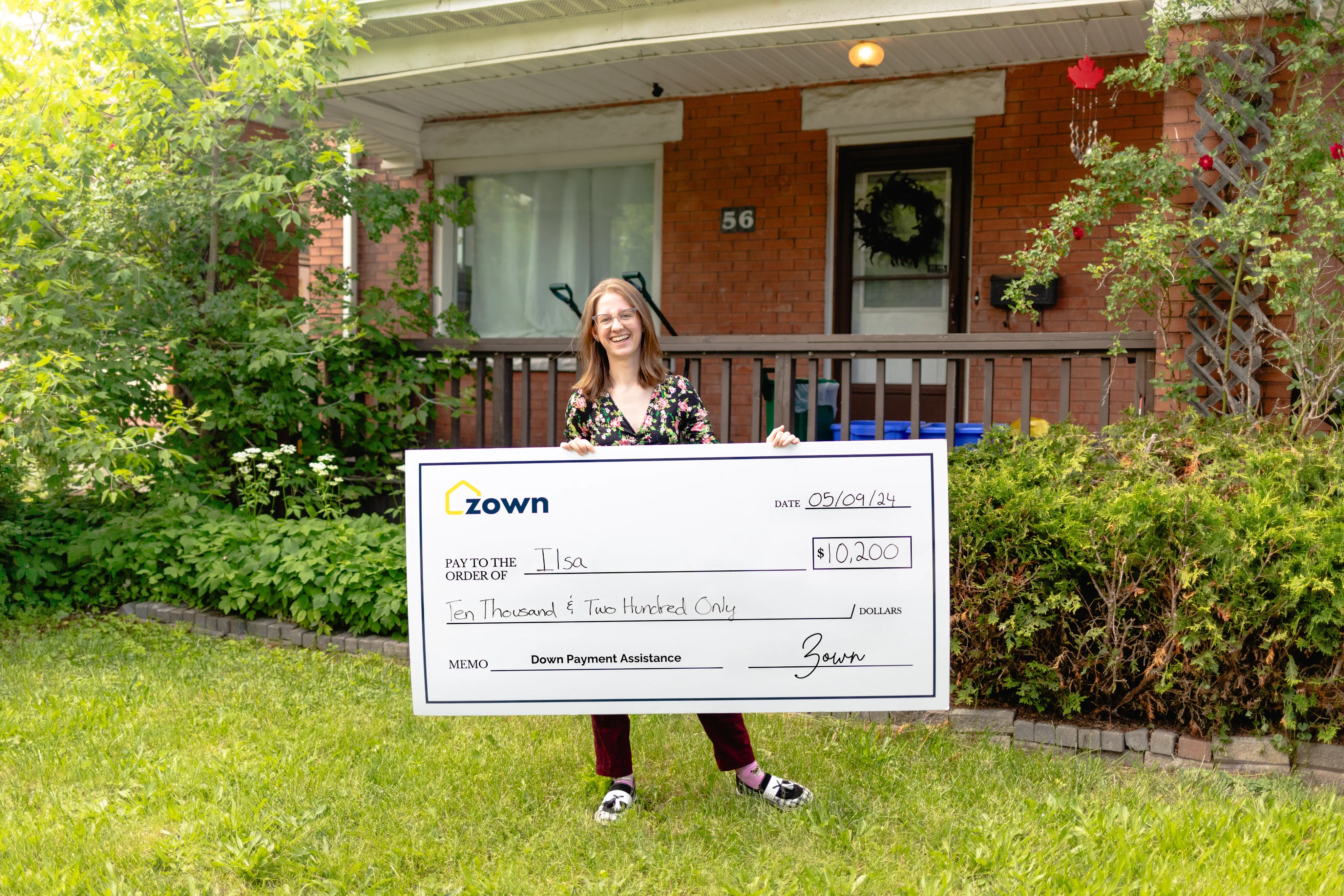
At Zown, the cashback takes the form of a Down Payment Boost: 1% of the purchase price, to a maximum of $25,000, paid into your savings at closing. On an $800,000 home that is roughly $8,000. Most buyers use it for closing costs and post-closing expenses like furniture and moving.
the maximum cashback a Zown buyer can receive at closing through the Down Payment Boost
You can read more in our guide to a cashback realtor in Ontario and how the money reaches you.
Are they salaried or commission-driven, and why does it matter?
Most agents earn a commission only when a deal closes. That is normal, but it creates a quiet pull: the bigger the price, the bigger the cheque, and no sale means no pay.
That does not make commission agents dishonest. Plenty are excellent. But it is worth knowing where the incentive points, because it can show up as pressure to offer more, move faster, or skip a home that would not close quickly.
Zown agents are salaried. Their pay does not rise with your purchase price and does not depend on rushing you to a yes. That removes a hidden conflict, so the advice you get is about what fits your numbers, not theirs. We cover this trade-off in how realtors get paid.
What experience should I look for?
You want someone who knows your specific search, not just real estate in general.
- Area: Do they work the neighbourhoods and municipalities you are targeting? Local knowledge affects pricing, offer strategy, and what to watch for.
- Property type: A detached-home specialist and a condo specialist do not think about the same risks. Condos come with status certificates and reserve funds; freeholds come with their own issues.
- Buyer side: Some agents mostly list and sell. You want someone who represents buyers regularly and knows how to write a winning offer for you.
- First-time buyers: If this is your first purchase, ask how many first-timers they have guided recently. The hand-holding matters.
The 12 questions to ask before you commit
Ask every agent you interview the same questions. The answers, and how comfortable they are answering, tell you most of what you need to know.
- Are you licensed with RECO, and which brokerage are you with?
- How are you paid on my purchase, and does any of it come from me directly?
- Do you offer a commission rebate or cashback to buyers? How much, and when do I receive it?
- Are you salaried or commission-based?
- How many buyers have you represented in my target area in the past year?
- Do you specialize in the property type I want (condo, freehold, pre-construction)?
- How will we communicate, how often, and how fast do you typically respond?
- Will I work with you directly, or hand off to a team or assistant?
- Can you walk me through the buyer representation agreement before I sign?
- How do you handle a situation where you also represent the seller?
- Can you share recent buyer references or reviews?
- What happens if I am not happy? Can I end the agreement?
If an agent gets defensive about pay, rebates, or the representation agreement, treat that as information.
What is the buyer representation agreement, and should I sign it?
The buyer representation agreement is the contract that makes an agent officially your representative. It sets out the term, the area, the commission, and each side's obligations.
Read it before you sign. Two things to check: the length of the term and whether it is exclusive. A shorter term or a defined trial period lets you change course if the fit is wrong. You can ask to narrow the area or the term. It is negotiable, and a good agent will explain it plainly rather than rush you through it.
Signing is normal and expected. Signing without reading it is the mistake.
What are the red flags, and what are the green flags?
Some signals are easy to read once you know to look. Here is a quick comparison.
Green flags vs red flags when choosing a buyer's realtor
- Explains exactly how they are paid, unprompted. Red flags: Vague or evasive about their commission
- Offers or clearly discusses cashback/rebates. Red flags: Dismisses rebates or claims they are not allowed
- Answers your questions before pushing homes. Red flags: Pressures you to sign or offer fast
- Comfortable with a shorter or trial term. Red flags: Insists on a long exclusive term, no discussion
- Discloses and explains dual agency openly. Red flags: Downplays representing both sides
- Shares references and real reviews. Red flags: Cannot point to any recent buyer feedback
Source: Zown Realty, Ontario 2026
A word on dual agency. This is when one agent (or brokerage) represents both the buyer and the seller in the same deal. It is legal in Ontario with disclosure and consent, but it is worth pausing on: one person cannot fully advocate for both sides at once. If it comes up, make sure it is disclosed in writing and that you understand what representation you are actually getting.
How many agents should I talk to?
Talk to at least two or three before you decide. Interviewing more than one is not rude; it is how you calibrate. You will quickly notice who listens, who rushes, and who can answer the pay question without flinching.
The goal is not the flashiest agent. It is the one who is honest about how they earn, knows your search, communicates the way you like, and treats your money as if it were their own.
Do I really need a buyer's agent at all?
For most first-time buyers, yes, because negotiation, paperwork, and deadlines carry real risk. We cover when it makes sense in do I need a realtor. The short version: a good buyer's agent is usually well worth it, especially when their pay does not come out of your pocket.
How do I check if an agent is licensed?
Every practising agent in Ontario is registered with RECO under a brokerage. You can confirm registration and check for any disciplinary history. Ask for the agent's full name and brokerage, then verify it. A legitimate agent will give you those details without hesitation.
See what your Down Payment Boost adds up to →
Reviewed by Arjun Dhawan, Head of Account Management and REALTOR® at Zown Realty Inc. Last updated July 16, 2026. General information, not legal or financial advice.